

Quick Neuron™ Precursor – Human iPSC-Derived Neural Precursor Cells (Healthy Donor)
Quick-Neuron™ human iPSC-derived neural precursor cells are expandable, multipotent neural progenitors that provide a versatile in vitro model of early human neural development. These cryopreserved, ready-to-use iPSC-derived precursor cells enable reproducible differentiation into multiple neural lineages and support applications in neurodevelopmental studies, cell fate specification, disease modeling, and compound screening.
$1,100.00
Advantages of iPSC-Derived Neural Precursor Cells
Neural Precursor Cell Protocol
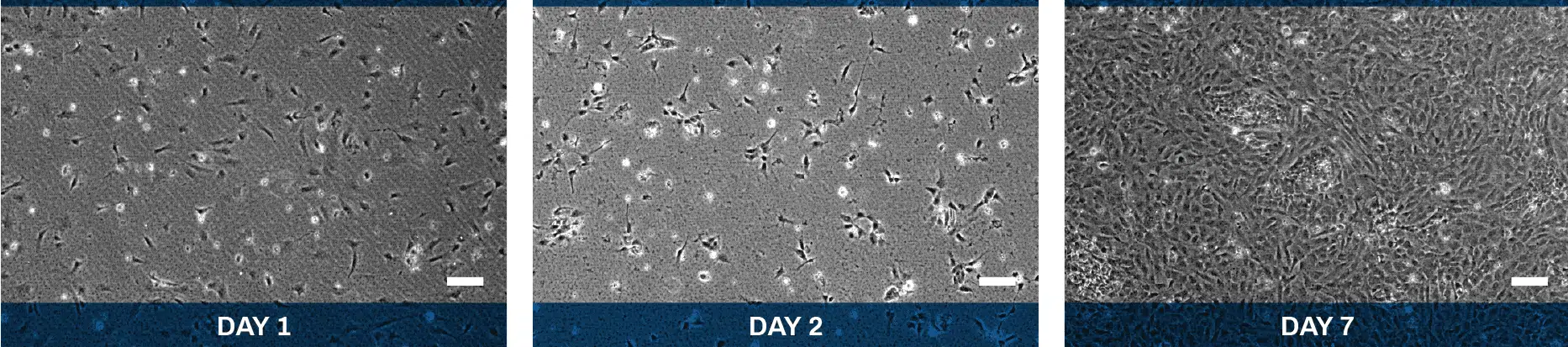
Our easy-to-follow, optimized neural precursor cell protocol supports rapid and reproducible differentiation of human induced pluripotent stem cells (iPSCs) via synthetic mRNA reprogramming. This step-by-step guide outlines key culture stages and timelines for generating functional neural precursor cells from human iPSCs.

Neural Precursor Cells Characterization
Accurate characterization of iPSC-derived neural precursor cells is essential for confirming cell identity, assessing culture purity, and ensuring reproducibility across experiments.
Neural Precursor Cell Marker Expression
Nestin and vimentin are two of the most well-established markers of iPSC-derived neural precursor cells, reflecting their identity and differentiation state. Nestin is a hallmark of neural progenitor identity, while vimentin supports the structural integrity of dividing precursor cells. Confirming co-expression of both is a critical quality checkpoint before downstream applications.


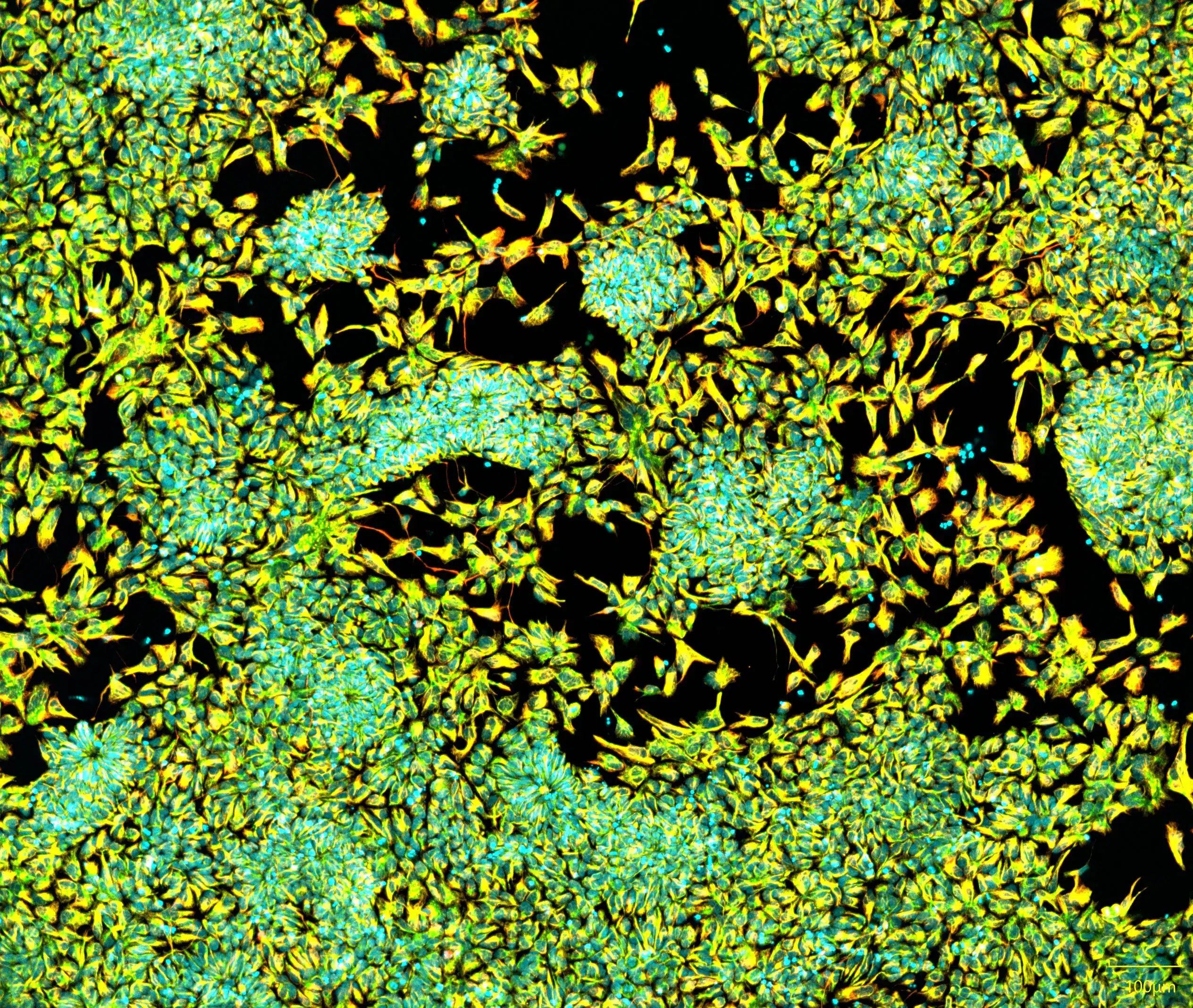
iPSC-derived neural precursor cells express key markers and display typical morphology. Immunofluorescent staining of Quick-Neuron™ Precursor cultures shows expression of vimentin and nestin on day 13 post-thaw (scale bar = 100 µm).
Real-time Quantitative PCR Analysis
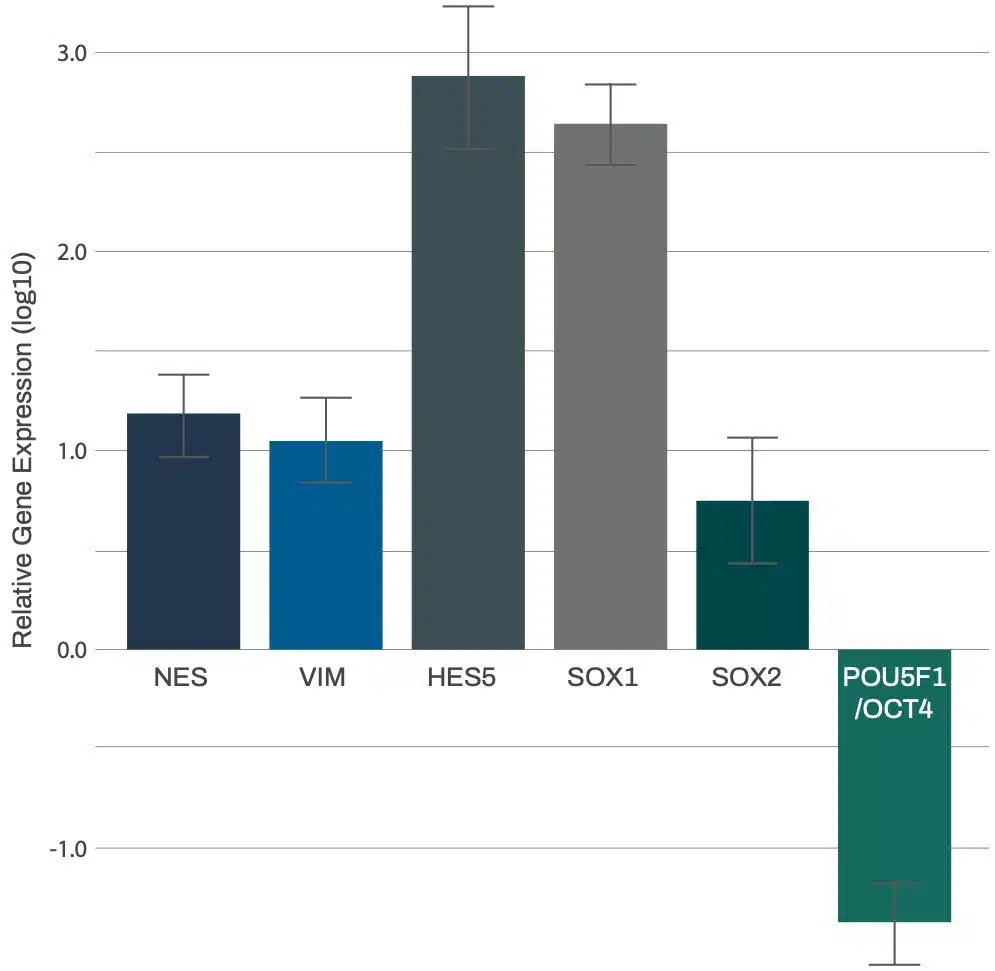
Real-time quantitative PCR analysis of expression levels of neuronal precursor-associated genes NES, VIM, HES5, SOX1 and SOX2, as well as the stem cell pluripotency marker POU Class 5 Homeobox 1 (POU5F1/OCT4), were examined. Graph shows gene expression in Quick-Neuron™ Precursor Culture on day 6. The relative gene expression is normalized to phosphoglycerate kinase 1 (PGK1), and then calculated as a fold induction relative to undifferentiated hiPSCs as a control. Error bars show standard deviation.
Product Specifications
| Parameters | Specifications |
|---|---|
| Product Name | Quick-Neuron™ Precursor – Human iPSC-derived Neural Precursor Cells |
| Catalog No. | NP-mRNA-HC-CW50065 |
| Product Components | Cryopreserved cells |
| Starting Material | iPSCs derived from peripheral blood mononuclear cells (CIRM line CW50065) |
| Storage Conditions | Frozen cells should be stored in liquid nitrogen (vapor phase). The rest of the components should be stored at -20°C. |
| Cell Type | Neural Precursor Cells |
| Culture Type | Feeder Cell-Free |
| Disease | Healthy Donor |
| Donor Sex | Female |
| Donor Age at Sampling | 74 |
| Donor Race Ethnicity | Caucasian, not Latino |
| Patient History | See Resources for more information. |
| Reprogramming Method | Episomal vector |
| Induction Method | Transcription factors delivered by synthetic mRNA |
| Growth Properties | Adherent |
| Number of viable cells | > 1.0 million viable cells per vial upon thawing |
| Cell viability and remaining live cells |
>50% at day 1, >211 live cells per mm2 >50% at day 7, >211 live cells per mm2 |
| Differentiation |
At Day 7 Post-Differentiation >80% Nestin+, >80% Vimentin+ |
| Sterility | No growth observed |
| Mycoplasma | No mycoplasmal enzymes detected |
| Morphological Observation | Cells are adherent and exhibit a uniform, bipolar or multipolar morphology, indicative of a proliferative neural precursor phenotype. |
| Restricted Use | For research use only. Not for use in diagnostic or therapeutic procedures. |