


Quick-Muscle™ Skeletal – Maintenance Medium
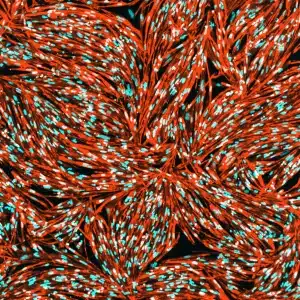
Quick-Muscle™ Skeletal – Maintenance Medium is formulated for long-term maintenance of human iPSC-derived skeletal muscle cells in vitro. Designed for research use, this medium supports consistent culture performance for downstream muscle biology and neuromuscular research applications.
$220.00
Product Specifications
| Parameters | Specifications |
|---|---|
| Product Name | Quick-Muscle™ Skeletal - Maintenance Medium |
| Catalog No. | SM-MM |
| Product Components | Component M1 and Component P |
| Storage Conditions | All components can be stored at -20°C or -80°C. |
| Cell Type | Skeletal Muscle |
| Shelf Life | 1 Year |
| Sterility | No growth observed for Bacteria and Fungus |
| Mycoplasma | No contamination detected |
| Restricted Use | For research use only. Not for use in diagnostic or therapeutic procedures. |
Skeletal Muscle Resources
Quick-Muscle™ Skeletal – SeV Kit
Characterization of iPSC-derived Skeletal Muscle Generated with Rapid Differentiation Method (Japan Muscle Society 2021)
Efficient differentiation of human pluripotent stem cells into skeletal muscle cells by combining RNA-based MYOD1-expression and POU5F1-silencing.
Epigenetic Manipulation Facilitates the Generation of Skeletal Muscle Cells from Pluripotent Stem Cells.
Therapeutic Genome Editing for Myotonic Dystrophy Type 1 Using CRISPR/Cas9.
No results found.
Related Products
Related products
FAQs
Does Quick-Tissue™ technology leave a genetic footprint?
Sendai virus (SeV) is an RNA virus, so it does not integrate into the genomic DNA. In principle, a foreign gene introduced intracellularly in the form of RNA is quickly translated and expressed because, unlike DNA, RNA does not need to enter the nucleus for forced expression, thereby providing no chance of mutagenesis. This is discussed in the following review paper: Yamamoto, et al., (2009) “Current prospects for mRNA gene delivery.” Eur. J. Pharm Biopharm 71, 484-489.
Will SeV remain active after differentiation?
No. The SeV used in our kits is a temperature-sensitive mutant that is active at 33℃ but becomes inactive at 37℃, which is the temperature instructed in the user guides post-differentiation.
Is Sendai virus (SeV) dangerous?
SeV is not pathogenic to humans (i.e., humans are not the natural host of the virus) and the infection does not persist in immunocompetent animals. Furthermore, SeV used in our kits does not produce infectious viral particles upon transduction to host hPSCs and is a temperature-sensitive mutant, such that it is active at 33℃ but becomes inactive at 37℃. However, because SeV can be transmitted by aerosol and contact with respiratory secretions and is highly contagious, appropriate care must be taken to prevent potential mucosal exposure to the virus. Our SeV-based kits must be used under Biosafety Level 2 (BL-2) containment with a biological safety cabinet or a laminar flow hood and with appropriate personal protective equipment. In the event that the virus comes into contact with skin or eyes, decontaminate the affected area by flushing with plenty of water and follow the safety manual prepared by your laboratory and approved by your Institutional Biosafety Committee.
Do I need a license agreement for any of Ricoh Biosciences’ products?
No. You don’t need any licence or material transfer agreement (MTA) to use our differentiation kits or iPSC-derived cells. However, please be advised that these products are for research use only.
No results found.