

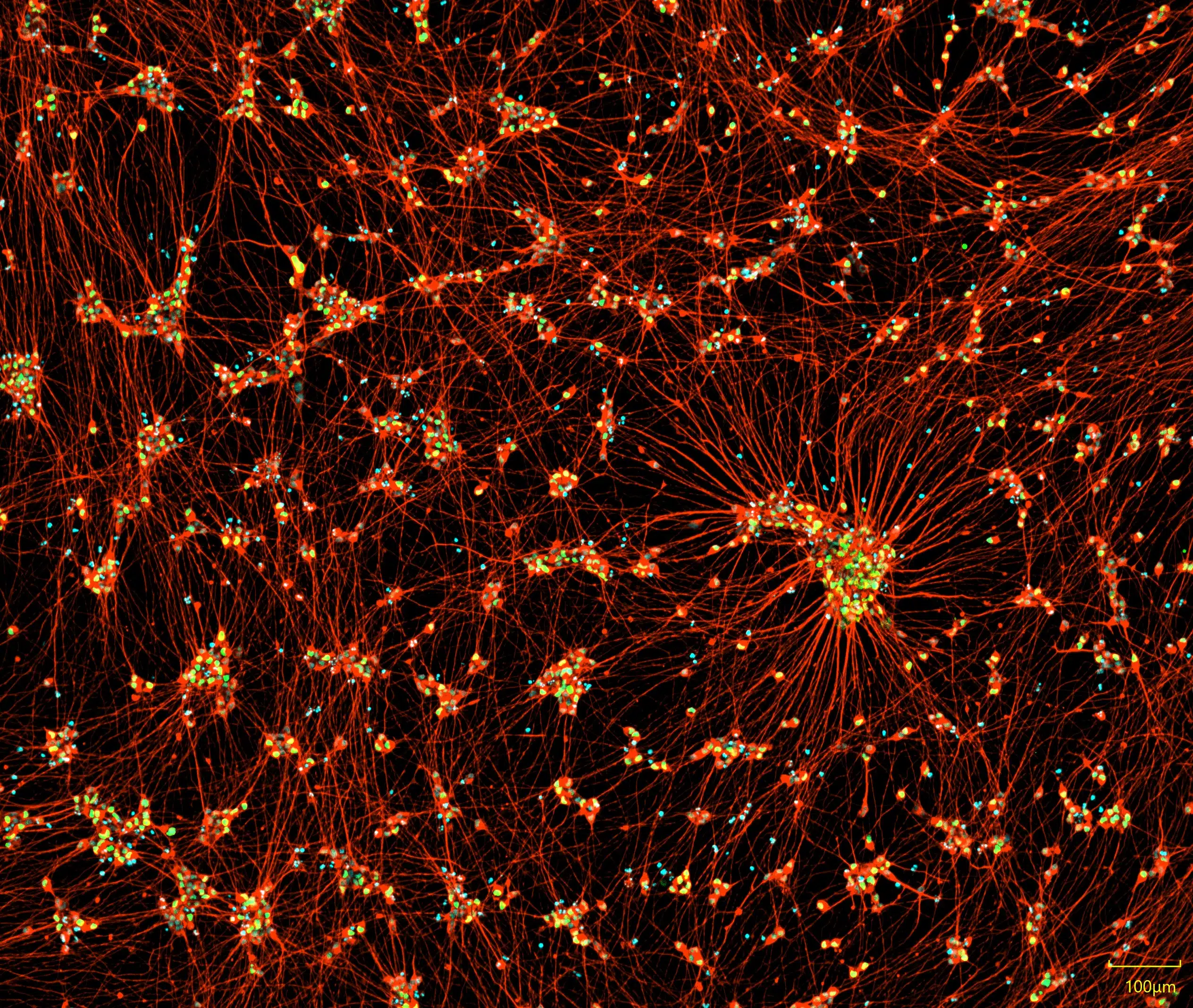
Quick-Neuron™ Motor – SeV Kit
Quick-Neuron™ Motor – SeV Kits enable the differentiation of human induced pluripotent stem cells into motor neurons using Sendai virus technology through an optimized and reproducible workflow.
Note: This kit is no longer available for individual sale. We now offer bulk orders and custom differentiation services to support your research and development needs.
Advantages of iPSC-Derived Motor Neurons
Rapid Differentiation
~1 week
Optimized & Reproducible
ISO-9001 certified
Highly Pure Population
ChAT+, HB9+
No Genetic Footprint
0 modifications
Motor Neuron Differentiation Kit Protocol
Explore our detailed differentiation protocols, a step-by-step guide designed to simplify and optimize your laboratory procedures using our iPSC-derived cells and differentiation kits. These protocols leverage the latest advancements in iPSC technology to ensure efficient and reproducible results.

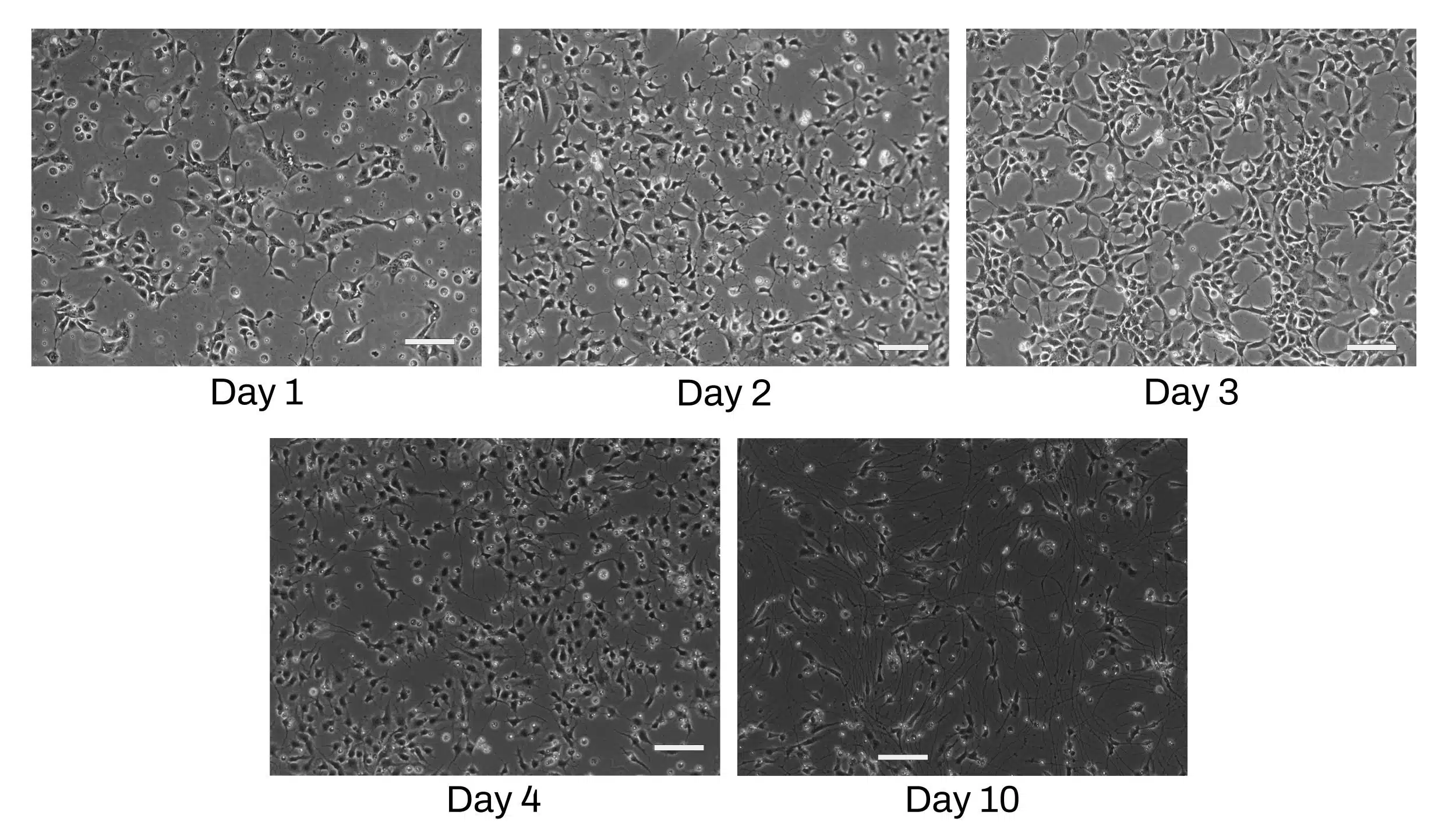
Motor neuron morphology is confirmed via phase contrast imagery: Representative images of Quick-Neuron™ Motor – SeV Kit cell cultures on days 1-10 post-differentiation (scale bar = 100 μm).
Motor Neuron Characterization
Characterization of iPSC-derived motor neurons is crucial to ensure their utility in research. Employing motor neuron markers, we can confirm the identity and purity of these neurons.
Motor Neuron Marker Expression
Understanding the role of motor neuron markers is crucial in neuroscience research. Our comprehensive guide delves into the identification and significance of these markers in iPSC-derived neurons, providing essential information for researchers.
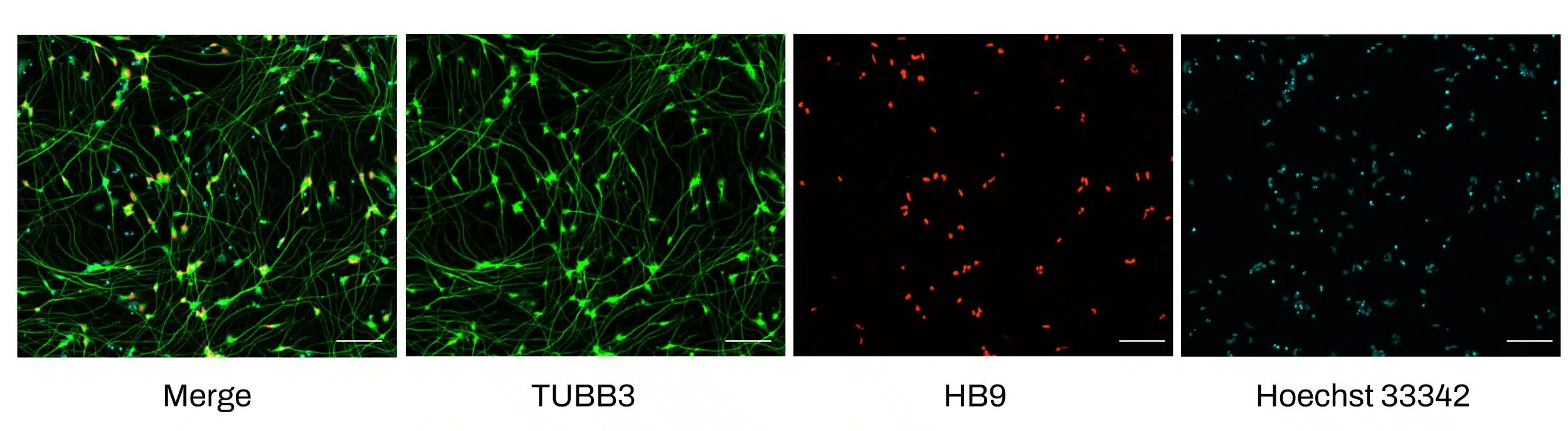
iPSC-derived motor neurons express neuronal markers and display typical neurite outgrowth. Immunofluorescent staining of iPSC-derived motor neurons at day 10 post-differentiation. Cells exhibit extensive neurite outgrowth and co-expression of the pan-neuronal marker TUBB3 and the motor neuron-specific marker HB9 (scale bars = 100 μm).
Real-time Quantitative PCR Analysis

Real-time quantitative PCR analysis of expression levels of genes CHAT, HB9, and ISL1 were examined. The graph shows gene expression in Quick-Neuron™ Motor – SeV culture on day 10 post-differentiation. The relative gene expression is normalized to phosphoglycerate kinase 1 (PGK1), and then calculated as a fold induction relative to undifferentiated hPSCs as a control. Error bars show standard deviation.
Product Specifications
| Parameters | Specifications |
|---|---|
| Product Name | Quick-Neuron™ Motor - SeV Kit |
| Catalog No. | MT-SeV |
| Product Components | QN-SeV-P, Component N1, Component A, Component P, Component K, and Coating Material A |
| Storage Conditions | SeV should be stored at -80°C. All other components can be stored at -20°C or -80°C. |
| Cell Type | Motor Neurons |
| Induction Method | Transcription factors delivered by Sendai virus vector |
| Differentiation |
At day 7 post-differentiation (CW50065) >80% TUBB3+, >50% ChAT+/TUBB3+, >50% HB9+/TUBB3+ |
| Sterility | No growth observed |
| Mycoplasma | No DNA detected |
| Restricted Use | For research use only. Not for use in diagnostic or therapeutic procedures. |
Motor Neuron Resources
Quick-Neuron™ Motor – Human iPSC-Derived Neurons
Quick-Neuron™ Motor – SeV Kit
Human Motor Neurons With SOD1-G93A Mutation Generated From CRISPR/Cas9 Gene-Edited iPSCs Develop Pathological Features of Amyotrophic Lateral Sclerosis.
Build Disease Models That Matter: The Power of Custom iPSC Differentiation
Amyotrophic Lateral Sclerosis (ALS)
No results found.
Related Products


FAQs
Do I need a license agreement for any of Ricoh Biosciences’ products?
No. You don’t need any licence or material transfer agreement (MTA) to use our differentiation kits or iPSC-derived cells. However, please be advised that these products are for research use only.
What kind of transcription factors are used for differentiation induction?
It is a proprietary formulated RNA and cannot be disclosed.
Does Quick-Tissue™ technology leave a genetic footprint?
Sendai virus (SeV) is an RNA virus, so it does not integrate into the genomic DNA. In principle, a foreign gene introduced intracellularly in the form of RNA is quickly translated and expressed because, unlike DNA, RNA does not need to enter the nucleus for forced expression, thereby providing no chance of mutagenesis. This is discussed in the following review paper: Yamamoto, et al., (2009) “Current prospects for mRNA gene delivery.” Eur. J. Pharm Biopharm 71, 484-489.
Will SeV remain active after differentiation?
No. The SeV used in our kits is a temperature-sensitive mutant that is active at 33℃ but becomes inactive at 37℃, which is the temperature instructed in the user guides post-differentiation.
No results found.